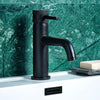
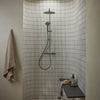
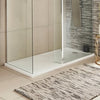
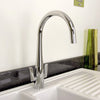
Designing an accessible bathroom isn’t just about meeting regulations—it’s about fostering dignity and independence. From sleek chrome mixer taps to navy grab rails and fold-down shower seats, these thoughtful touches create safe, stylish spaces where accessibility meets elevated design.

The Complete Accessible Bathroom Renovation Guide
Creating an accessible bathroom transforms daily living into an experience of safety, independence, and dignity for homeowners of all ages. With the UK’s aging population and growing awareness of inclusive design, an accessible renovation enhances usability and adds significant resale value to any property.
This guide brings together planning, fixture selection, compliance details, funding options, and marketing tips to help you deliver a seamless, compliant, and commercially compelling accessible bathroom project.
Planning Your Layout
Effective planning lays the foundation for an accessible bathroom that feels spacious and intuitive. Begin by measuring clearances for wheelchairs, walkers, and carers, aiming for at least 1,500 mm of turning space wherever possible.
Map out fixture zones—position the toilet, sink, and shower in a logical sequence that minimises transfers and maximises open space. Draw a scaled floorplan to visualise movement paths, confirm door swings won’t obstruct key areas, and identify where grab rails and seating will go.
Choosing the Core Fixtures
Selecting the right fixtures ensures comfort, safety, and style.
- Walk-In Baths vs. Wetrooms
- Walk-in baths provide a built-in seat and optional hydrotherapy jets but require a larger footprint.
- Wetrooms eliminate step-overs and create uninterrupted access, perfect for compact or minimalist designs.
- Shower Seats and Shower Toilets
- Opt for fold-down or wall-mounted seats rated for at least 150 kg, with quick-dry surfaces.
- Choose a shower toilet with integrated bidet functions to reduce twisting and stretching during use.
Safety Add-Ons and Accessories
Small additions dramatically boost peace of mind and usability.
- Grab Rails
- Fit rails at 800–900 mm above the floor beside toilets and in shower areas.
- Select stainless steel or powder-coated finishes for enduring strength and easy cleaning.
- Anti-Slip Flooring and Trays
- Use textured vinyl or ceramic tiles rated R11 for slip resistance.
- Incorporate low-profile shower trays (25–30 mm) to minimise trip hazards.
Installation Tips and Compliance Deep Dive
Ensuring regulatory compliance protects users and avoids costly re-work. Here are the key Building Regulations Doc M requirements for accessible sanitary accommodation:
- Minimum Clearances
- Door-opening width of at least 775 mm (750 mm for power-assisted sliding doors).
- Maneuvering space of 1,500 mm × 1,500 mm at WC entrances.
- Clear floor area of 2,200 mm × 1,500 mm in front of the WC for side or front transfers.
- Door-Opening Requirements
- Doors should open outwards or slide clear to maximise internal width.
- Lever-style handles positioned 900–1,100 mm above floor level.
- Thresholds limited to a maximum rise of 15 mm, allowing gentle ramping.
BS 8300-1:2018 Quick Summary
BS 8300-1:2018 offers guidance on spatial planning and fittings for wheelchair users:
- Wheelchair Turning Circles
- A clear 1,500 mm diameter circle for full 360° rotation.
- Alternatively, a “T-shaped” 1,800 mm × 1,200 mm maneuver space if a full circle is not possible.
- Sanitary Space Requirements
- Centre-to-centre distance between WC and adjacent surfaces: 480–500 mm.
- Forward reach zone of 650 mm to controls and grab rails.
- Sink with 700 mm knee clearance and controls no more than 1,200 mm above the floor.
Ready to transform a bathroom into a hub of safety and style? Explore our full range of accessible fixtures—from walk-in baths to anti-slip trays.